Art Hotels
These are hotels made out of buildings that were something else first, and that say so. A palace, a nursing order's wards, a corner block of flats: the conversion kept the stair, the ceiling or the chapel and worked around it. What follows describes the fabric of each house and what a guest can see of it.
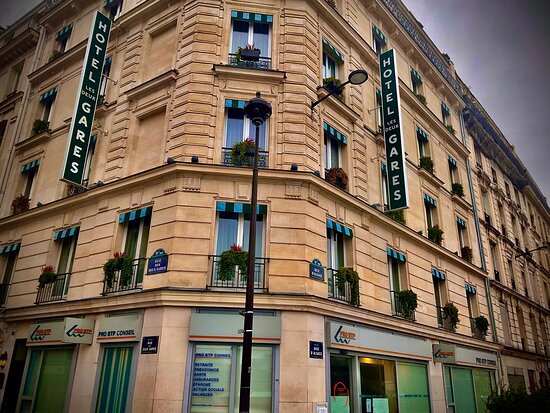
Hotel Les Deux Gares
Rue des Deux Gares, 10th arrondissement, Paris, France
The house sits on a short street in the tenth arrondissement, a few minutes on foot from both Gare du Nord and Gare de l'Est, which is where its name comes from. It is an ordinary Parisian corner building rather than a landmark, and its interiors were drawn by a decorator working in strong colour from the entrance upward.
Inside, the decoration is the point: painted panelling, patterned floors, striped and floral fabrics, and green woodwork carried out of the hall and into the bedrooms. A small bar and a dining room take the street level. Guest rooms are modest in size and furnished to the same scheme.
The street itself is quiet, hemmed in by the two station approaches. Cafes, the canal walk along the Saint-Martin and the market stretch of the Faubourg-Saint-Denis are all a short distance off, and the two termini put much of the country within a morning.
- BuildingCorner apartment house, converted
- StreetRue des Deux Gares, 10th arrondissement
- Source seenSeptember 2026
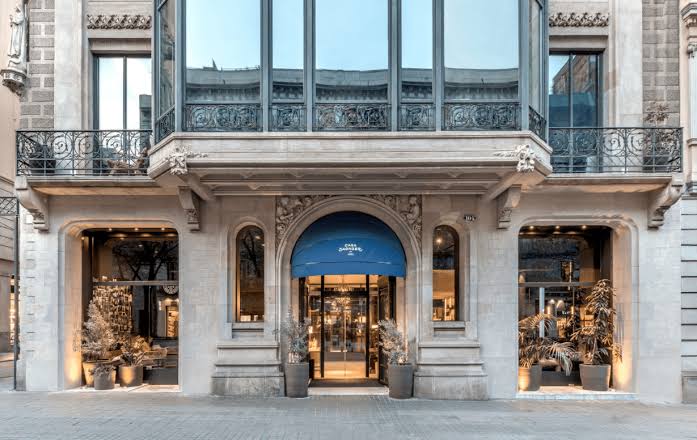
Casa Sagnier
Eixample, Barcelona, Spain
The building is an apartment house in the Eixample, the gridded district laid out across the plain north of Barcelona's old town in the last century and the one before it. Its street front keeps the tall shuttered windows and iron balconies common to the quarter, and the conversion left the stair and the proportions of the original flats legible.
Guest rooms follow the old room plan, so ceilings are high and windows are large. Mouldings, tiled floors and some of the original joinery were kept where they had survived. Shared space is modest: the house reads more like a set of flats than a full-service hotel.
The blocks around it are residential, with chamfered corners, shops at street level and plane trees along the pavement. Passeig de Gracia and the older streets below Placa de Catalunya are both walkable, as is the Sagrada Familia further east.
- BuildingEixample apartment house, converted
- StreetEixample, north of the old town
- Source seenSeptember 2026
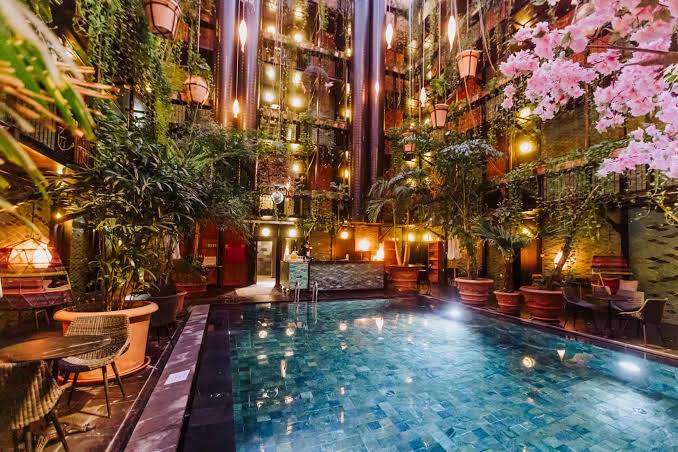
Manon Les Suites
Gyldenlovesgade, central Copenhagen, Denmark
Manon Les Suites takes up a large block near the Copenhagen lakes, at the edge of the city centre. The structure is a twentieth-century office and apartment building rather than a period house, and the conversion turned its interior court into the main event: a covered atrium planted heavily and ringed by the guest-room galleries.
Balconies look down into that court from every floor, and the planting climbs the walls between them. A pool sits at the bottom of the atrium, with a restaurant off the lobby and a studio used for classes. The rooms themselves are plain beside the shared space.
The street runs down to Sankt Jorgens So, one of the rectangular lakes that mark the old city boundary, and the path around them is a common walking route. Norreport station, the botanical garden and Orstedsparken are all close.
- BuildingTwentieth-century block with a planted court
- StreetGyldenlovesgade, by the lakes
- Source seenSeptember 2026
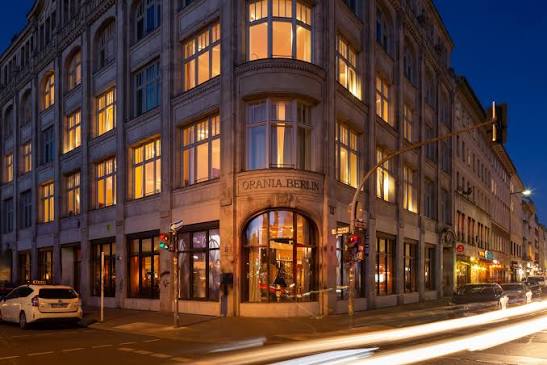
Orania.Berlin
Oranienplatz, Kreuzberg, Berlin, Germany
The house dates from 1913 and stands on Oranienplatz in Kreuzberg, a square that has been rebuilt around it more than once. It served as a residential and commercial block before the present owners restored the front and reopened it as a hotel, with a room for performances kept on the ground floor.
That room is used for concerts on a regular schedule, and the restaurant and bar are arranged around it rather than shut away from it. Upstairs the rooms are panelled and quiet, several of them facing straight onto the square. Instruments and records are part of the furniture.
Oranienplatz lies between the Landwehr canal and Moritzplatz, in a part of Kreuzberg that stayed residential. Canal-side markets and small galleries are within walking distance, and Gorlitzer Park is further east along Oranienstrasse.
- BuildingCorner house of 1913, restored
- StreetOranienplatz, Kreuzberg
- Source seenSeptember 2026
August
Groen Kwartier, Antwerp, Belgium
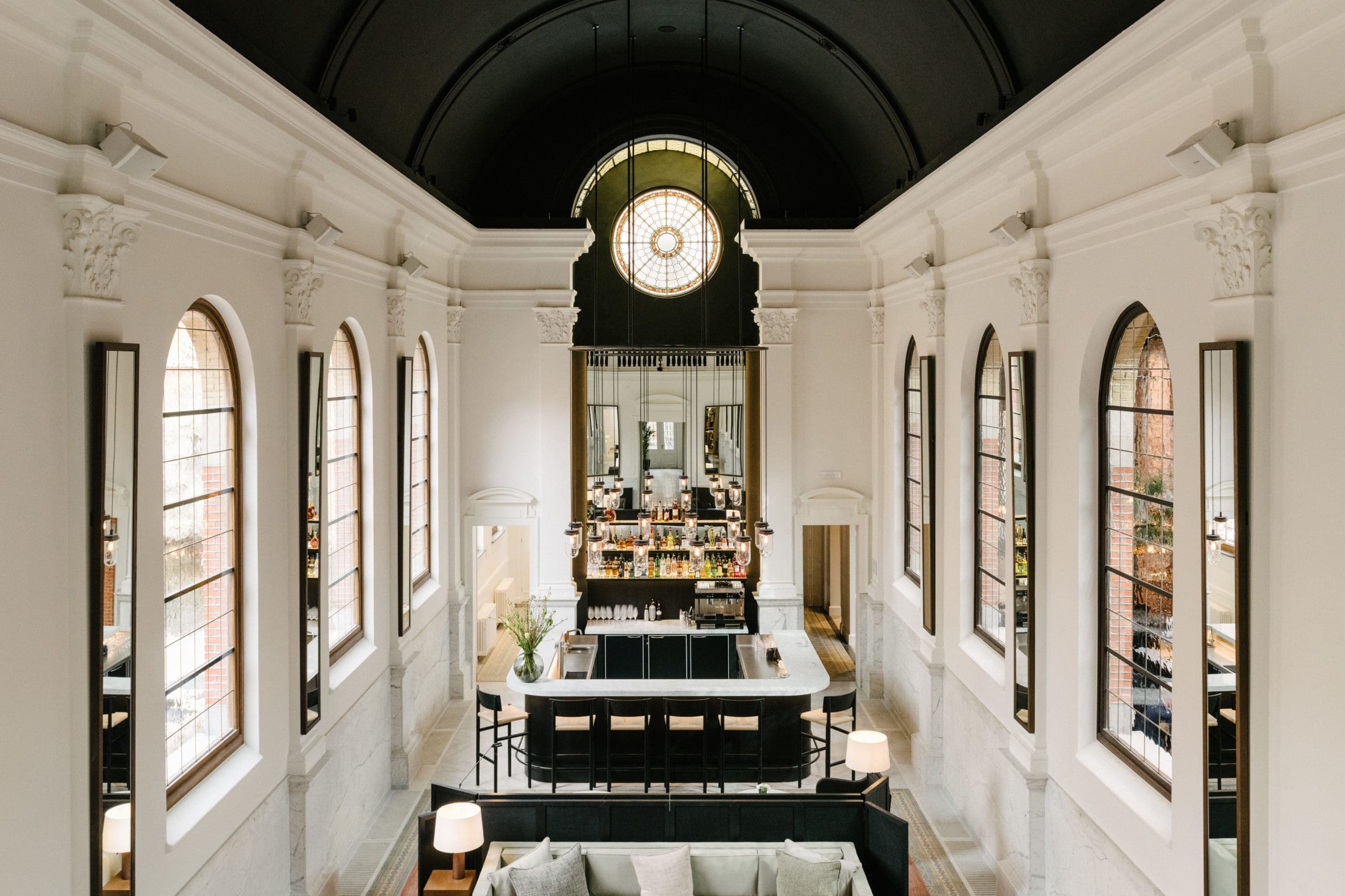
August stands in the Groen Kwartier, a former military hospital site in Antwerp given over to housing. The hotel took a group of nineteenth-century brick buildings, among them a chapel and wards once run by an Augustinian nursing order, and left the exteriors close to how it found them. The new work is a glazed pavilion set among the old volumes.
The chapel now holds the bar, its height and windows untouched; the wards became guest rooms with plain plaster, dark wood and few objects. A walled garden and a courtyard connect the separate buildings, and the pavilion takes the restaurant.
The Groen Kwartier is residential and green, a short ride south-east of the centre. The diamond district, the central station and the museum streets of the Zuid are all reachable by tram, with Nachtegalenpark further out.
- BuildingNineteenth-century hospital buildings and a chapel
- StreetGroen Kwartier, south-east of the centre
- Source seenSeptember 2026
Verride Palácio Santa Catarina
Santa Catarina hill, Lisbon, Portugal
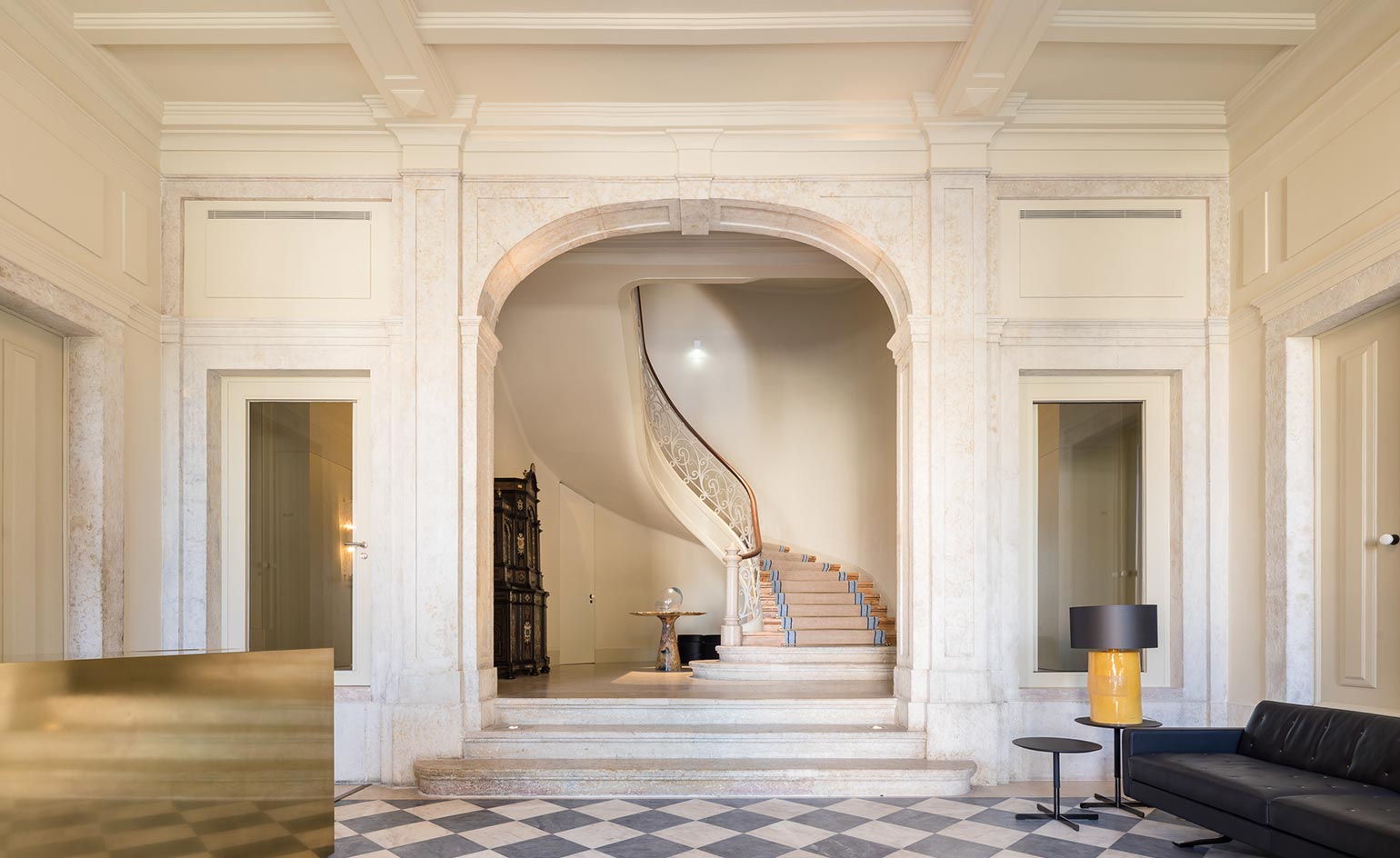
The palace was built in the eighteenth century on the Santa Catarina hill, high above the Tagus, and repaired after the earthquake that flattened much of Lisbon. It stayed in private hands for generations before a restoration turned it into a hotel, keeping the stone stair, the painted ceilings and the tiled entrance hall in place.
Modern furniture was set against those old surfaces rather than matched to them, and several rooms keep their frescoed ceilings. A roof terrace carries a pool and a bar, the restaurant sits on the main floor, and a library room opens off the stair.
The Miradouro de Santa Catarina is a few steps away, looking over the river and the bridge. The Bica funicular street, Cais do Sodre and the Bairro Alto are all downhill, and the walk back up is steep whichever way it is taken.
- BuildingEighteenth-century palace, restored
- StreetSanta Catarina hill, above the river
- Source seenSeptember 2026
This site is independent and reference-only. What is written here was read from open sources and can go out of date without notice: houses change hands, rooms are refitted, restaurants close. Nothing on this page is affiliated with the hotels named, nothing is sold and nothing is reserved. Confirm anything that matters with the house itself.